


In connection with National Teacher Appreciation Week, swark.today salutes our area teachers and offers profiles of several who have made essential contributions to bringing our youngsters along toward bright futures and greater control of their lives.
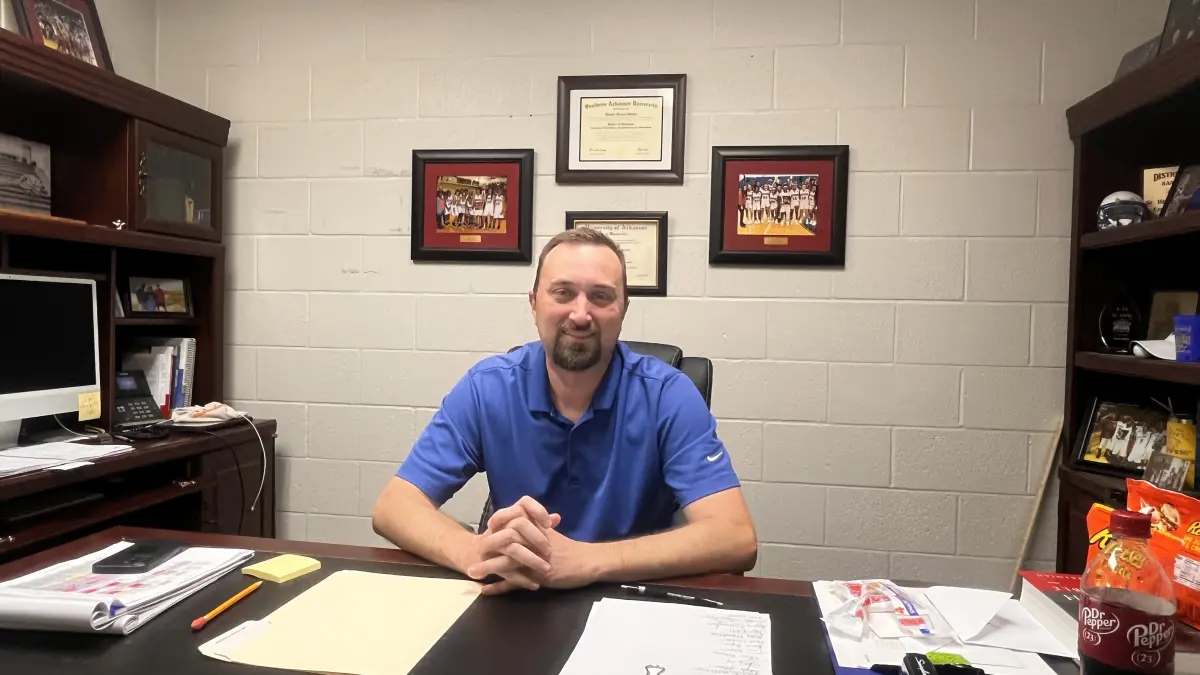
When Spring Hill High School Principal Ronald Smead heard his name announced as Hempstead County Educator of the Year at last month’s Hope-Hempstead County Chamber of Commerce Banquet, his first instinct was not to step forward, but to look around. His thoughts were of the other teachers and staff at his school.
“I don’t want any limelight on me whatsoever,” Smead said. “I just want everybody to understand that they are the ones doing all the work. They’re in the trenches, they’re in the classrooms, and they’re putting forth the effort, and they’re working their tails off.”

For Smead, now in his fourth year as principal at Spring Hill, the award was less an individual recognition than a reflection of a system he believes in deeply. “It all goes back to the teachers,” he said. “Our students have worked extremely hard. Our teachers have worked extremely hard.”
That emphasis on shared success is rooted in a life that, by his own description, was steeped in education from the beginning. “My dad was an administrator. My mom was an English teacher,” he said. “So we were raised up in it.”
With siblings also entering education, the path might have seemed predetermined. But Smead’s early ambitions took a slightly different turn. “When I graduated, I was a coach,” he said. “I was coaching first.”

A graduate of Kingsland High School, he found his professional footing at Fordyce, where he would spend 20 years, including a long tenure as head girls basketball coach.
The influence of his own high school coach, Tommy Harper, proved decisive on Smead’s choosing coaching. “He was a phenomenal guy, a big influence on my life,” Smead said. “I love sports.”
Harper’s mentorship extended beyond inspiration into direct collaboration. “I got the opportunity to work with him as an assistant coach at Fordyce when I started my career,” Smead said. “Then took over for him after he retired.”
But alongside athletics, another passion ran parallel. “I also had a passion for music and singing,” he said. “Southern Gospel music.” Beginning at age 14, Smead played drums in a gospel group and later sang across the region.

“I’ve been in the ministry since I was 14 years old,” he said.
At one point, he considered pursuing music more fully. “I thought about moving to Nashville after graduation,” he said.
Advice from his father redirected that path. “I got some good advice about getting an education,” he said, noting the importance of having something “to fall back on.”
That advice proved pivotal as Smead worked his way through college at the University of Arkansas at Monticello under demanding circumstances. “I was married, had a baby on the way,” he said. “I worked five jobs and went to school full time.”
His schedule during those years reflected the work ethic that would later define his professional philosophy. His description of his workload is daunting. “I worked at Benton Funeral Home picking up bodies during the night,” he said. “I had a bus route, worked at Johnson’s warehouse showroom, did deliveries.”

From there, Smead moved directly into coaching and teaching, building a career that would eventually lead to administration. “I didn’t get my degree in administration till late,” he said, noting that he completed his educational leadership degree at Southern Arkansas University while transitioning into his current role.
Looking ahead, he has not ruled out further advancement. “I am looking toward my superintendent certificate. That’s what’s going there,” he said, gesturing to a place on his office wall.
And to this day, whether in the classroom or on the court, Smead’s approach is shaped by lessons passed down from Harper. “It doesn’t take talent to hustle and be on time,” he said. “That’s where it starts.”
Time management, he said, is less about control than adaptability. “You can’t over bury yourself,” he said. “You have to monitor and adjust, adapt on the fly.”

Those principles carried over into administration, where he applies a coaching mindset to leadership. “You have to have high expectations, high standards,” he said. “You have to have discipline, desire and dedication.”
For Smead, success is measured in outcomes for students and staff. “Seeing those kids that were successful, that’s what mattered to me,” he said. “When you see them being successful, that’s why you do it.”
At Spring Hill, that same philosophy extends to teachers. “When they’re successful, it shows that our students are being successful.”
He views the school as an interconnected system. “The students are supposed to make the teachers’ jobs easier,” he said. “The teachers are supposed to make my job easier, it’s a stair step.”
This systemic view also informs his perspective on broader educational challenges, particularly the influence of technology, which has come under question recently. “Everything is wrapped in the palm of your hands,” he said. “We have to monitor that, because although some of that can be really good, most of it can be really bad.”

Motivating students in that environment requires a greater effort now given that hand-held devices can be difficult for teachers and parents to compete with. “It’s harder to get them to do anything because all the entertainment [is] right there,” he said.
His response has been to create structure and incentives and to strictly observe Arkansas state policy against students keeping their cell phones during class. “No cell, bell to bell,” he said, describing this policy. He also builds in a system of rewards such as trips and activities tied to performance: “When we work hard, good things happen.”
He also emphasized the importance of addressing students holistically, especially including their mental health. “I tried to give avenues to those students [to receive counselling] and teach them how to overcome the stresses of life,” he said. “That can’t be overlooked.”

Underlying all of it, though, is a belief in teamwork at every level of the school district. “When you get that team all functioning as one unit, you can’t help but be successful,” he said.
That outlook, formed over decades in classrooms, gyms and administrative offices, continues to guide his work. His ambitions, too. As he looks ahead, both to his own future and that of his students, Smead returns to the same foundation that has carried him from Kingsland to Spring Hill.
“You just try to be that example and that motivator to be the best we can,” he said.