

BENTONVILLE, Ark. — Governor Sarah Huckabee Sanders today announced the eighth installment of Faces of Arkansas, a monthly series highlighting Arkansans whose portraits and stories are displayed at the entrance to the Governor’s office as a reminder of who the Governor and her team serve every day: the people of Arkansas. The series was launched to keep the focus of public service rooted in the individuals and communities that make the state what it is.
Each month, a different Arkansan is featured through a written profile, portrait photography, and a short video, with their framed photo hanging inside the Capitol. Selections are based on individuals who make Arkansas function — whether by serving as the heartbeat of their local communities, overcoming obstacles to achieve their dreams, or playing an essential role in their industry.

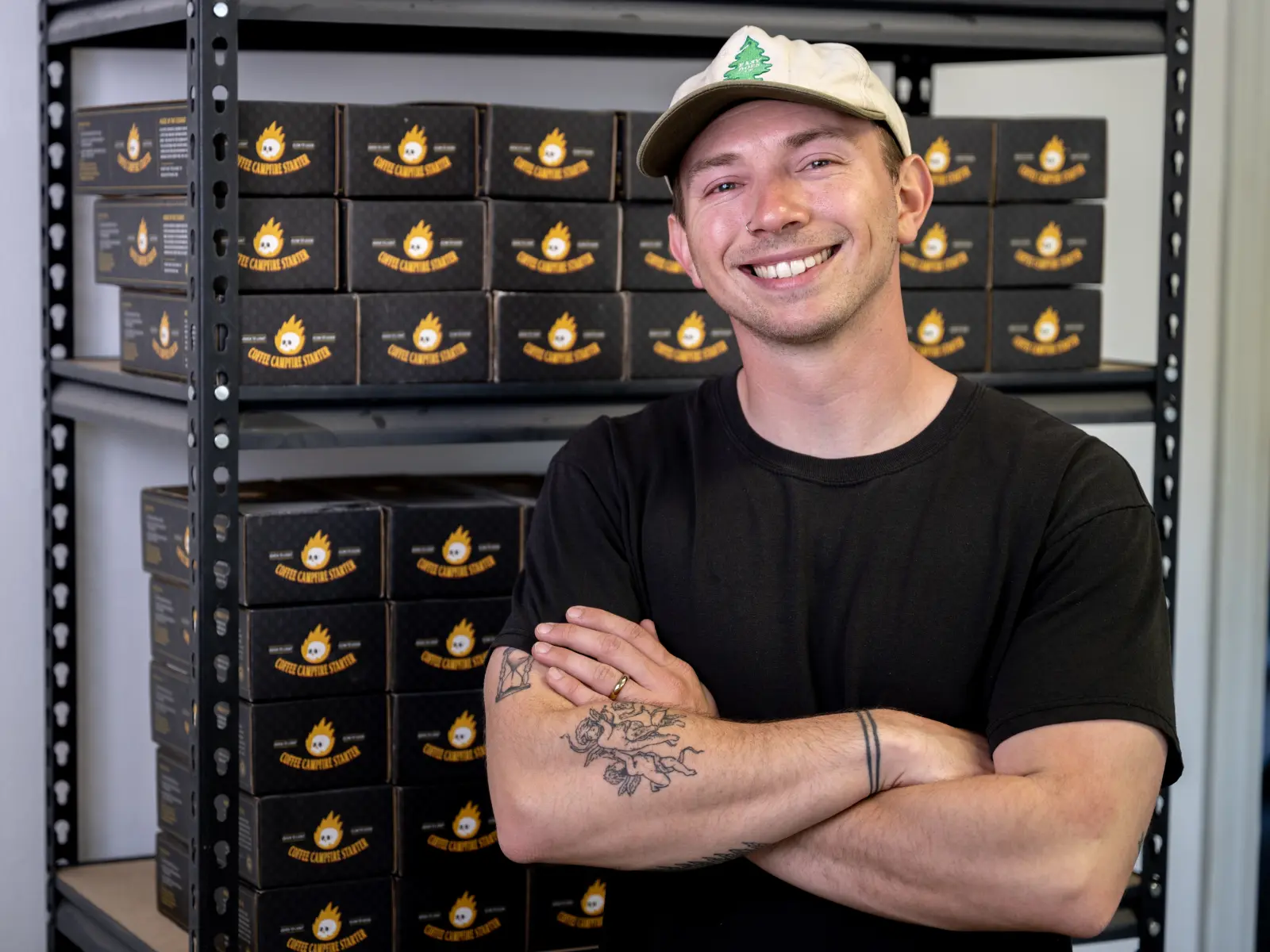
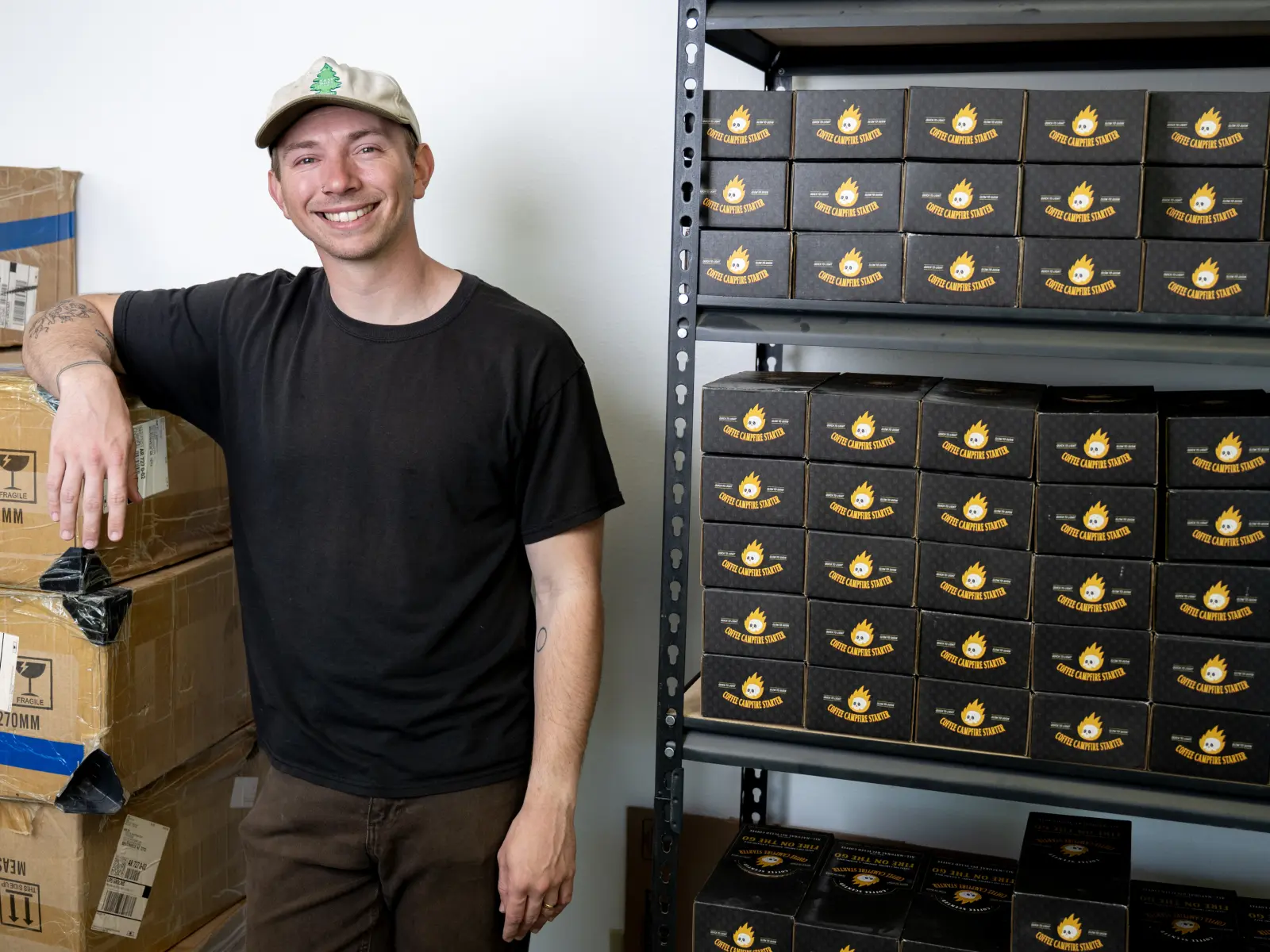
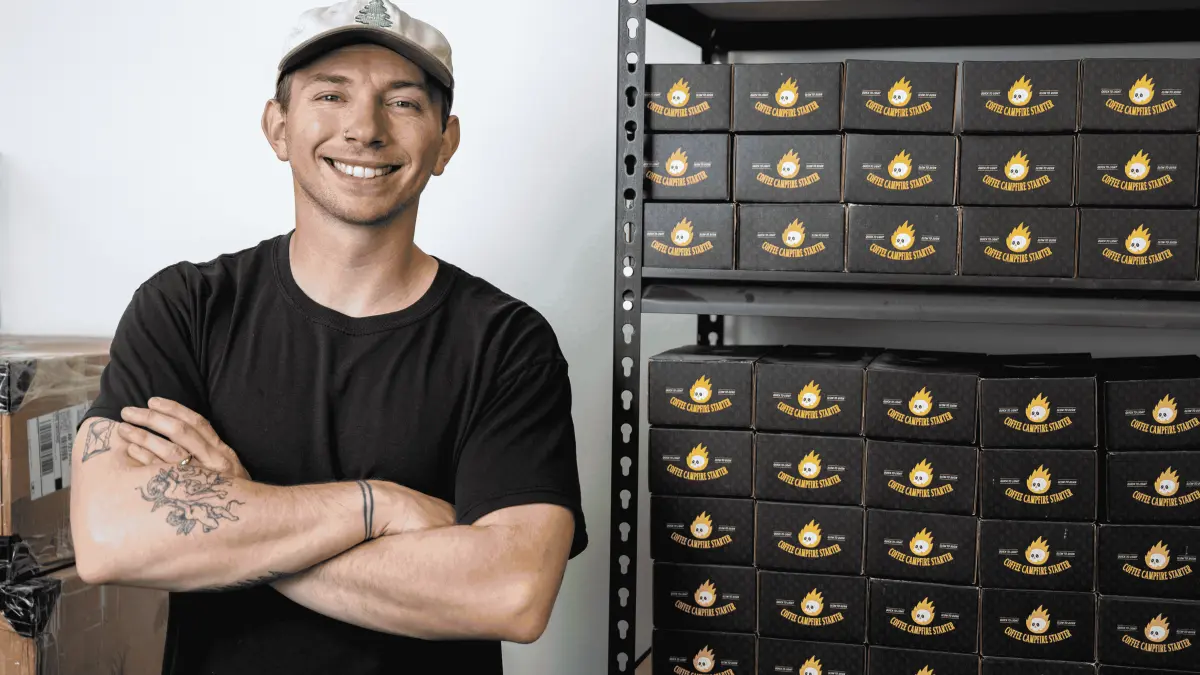
This installment features Collin Whittington, founder of Roasties in Bentonville, whose entrepreneurial spirit transformed an overlooked byproduct into an Arkansas-made business rooted in innovation, sustainability, and the outdoors.
Collin Whittington – The Second Look
Every industry has something it throws away. Manufacturing has scrap metal. Lumber mills have sawdust. Coffee has chaff—the thin, papery skin that separates from every bean during roasting. Most people never see it. Coffee roasters do. Every day, they sweep it into bags headed for the landfill before doing the exact same thing tomorrow. Eventually, even waste becomes routine. For nearly everyone, that's where the story ends, but for Collin Whittington, it was where one began.
"It just had to have a use," he said.
That thought stayed with him longer than he expected. Long before his company, Roasties – an all-natural fire starter made from recycled coffee chaff and beeswax – found its way into outdoor outfitters, Arkansas State Park gift shops, and retailers across the region, Collin was roasting coffee in Fort Smith. The work became second nature – the timing, the temperatures, the rhythm of each batch. So did cleaning up afterward. "When you roast coffee at 400 degrees, the skin comes off and it's collected in the coffee roaster," he explained. "Ninety-nine percent of coffee roasters throw it away." He couldn't stop wondering why.
Not because coffee chaff looked particularly valuable. It didn't. It was light enough to float through the air, messy enough to become a nuisance, and combustible enough to be considered a fire hazard inside the roastery. "So we actually turned the problem into the solution," Collin said with a grin. "Made it something that's supposed to be caught on fire."
Some businesses begin with a market analysis. Others begin with a question that refuses to leave you alone. For Collin, the idea arrived in 2021. Then it waited. For nearly three years, it lived quietly in the back of his mind until a road trip through the Pacific Northwest gave him something entrepreneurs rarely have enough of: time.
"At some point," he said, "I was like, let's just do it." So, he walked into Onyx Coffee and asked if he could take bags of coffee chaff home. "They said, 'Sure...okay...whatever,'" he laughed. The experiments started in his kitchen. His roommate tolerated them. Barely.
Later, when he married Hannah, the operation moved into their house, where she inherited the dust, the mess, and eventually an order for 2,000 fire starters that transformed their home into a small manufacturing shop almost overnight. "She also wasn't thrilled," he joked. Like most overnight successes, Roasties looked anything but glamorous in the beginning. It was coffee chaff. Beeswax. Trial and error.
Some mixtures burned too quickly. Others wouldn't stay lit long enough to matter. Space disappeared almost as quickly as time did. Then, one worked. The little puck burned just long enough to catch kindling. Roasties was born.
Good ideas have a funny way of changing how you see ordinary things. After that, coffee chaff wasn't just coffee chaff anymore. It was possibility. Arkansas has always had people like that. People who fix before they replace. People who build businesses around kitchen tables and workshops. People who see potential where someone else sees inconvenience. Resourcefulness has never really been a trend here, it's simply part of the culture, and Roasties feels like it belongs because that mindset already did. For Collin, keeping the company in Arkansas was never much of a question.
"We've gotten tons of people that have tried to produce the product for us as we've grown," he said. "But I do want to stay here manufacturing in Arkansas." Born and raised here, he credits much of the company's growth to the people around him. "We felt really supported," he said. "Especially in the Northwest Arkansas outdoor recreation scene. Man, they're like the best community of all time."
That support came through programs like the University of Arkansas
Office of Entrepreneurship & Innovation’s Greenhouse Outdoor Recreation Program (GORP), where Collin first learned something every entrepreneur eventually has to figure out: a good product isn't enough if you can't explain why it matters. "I could never have said my story in one sentence before GORP," he said. "They really challenge you to figure out what your story actually is."
Today, his answer is remarkably simple. Roasties is an all-natural fire starter made from a byproduct of the coffee roasting process. Simple, clear, memorable. Behind that one sentence, though, is something much bigger.
Each year, billions of pounds of coffee chaff are discarded around the world. Most people don't even know it exists. "They don't even know what's being thrown away," Collin said. He hopes they start paying attention, not just to coffee, to everything. "I think throughout the process I've realized that if you look at even a task that seems mundane—like throwing away a bag of waste—and challenge those things you don't think about every day..." He paused. "...what's the task that I don't like doing the most? And how can I make that better?"
That's a different way of looking at the world. Not every overlooked thing deserves a second life. But maybe more of them do than we realize.
What started in a kitchen has since grown into a company carried in more than 100 stores. Roasties has earned recognition through Arkansas' outdoor recreation community, won pitch competitions, and continues expanding production. Collin still sounds surprised by most of it.
"There was a brief period of, 'Oh wow, we did it,'" he said. Then his mind moved somewhere else. "'Wow, we're in 100 stores...I need more boxes. I need more chaff.'" His wife reminds him to celebrate. When asked what it means to be selected as a Face of Arkansas, Collin didn't talk about himself for very long. "It's surreal," he said. Then he started talking about the community instead. That seems to happen a lot.
Recognition has a way of circling back to gratitude. Awards eventually become work again. Even now, after the growth, the retailers, and the recognition, his evening plans remain refreshingly ordinary. "Tonight," he said, "I'm going to be making fire starters by myself in this room."
The best ideas rarely arrive fully formed. They begin with curiosity, grow through persistence, and succeed because someone cared enough to keep asking one more question after everyone else stopped.
Every Roastie eventually burns away, exactly what it was designed to do. But long before it catches fire, it has already done something else. It gave new purpose to something the rest of the world had already decided was finished.